
Oral Cancer: Don’t Ignore the Symptoms
Every year, thousands of people are diagnosed with oral cancer — and many of those cases could have been caught sooner. The truth is, early detection dramatically improves survival rates, yet most people don’t know what to look for. If you’re a patient looking for a Dentist Kyle residents trust, this guide is for you. At Kyle Parkway Dentistry, we believe that awareness is the first step toward saving lives.
What Is Oral Cancer?
Oral cancer refers to cancer that develops in any part of the mouth — including the lips, tongue, cheeks, floor of the mouth, hard and soft palate, sinuses, and throat.
Like most cancers, it can be life-threatening if not diagnosed and treated early. The good news? When caught in the early stages, oral cancer has a significantly higher survival rate. That’s why routine dental visits with a trusted Kyle Dentist are so important.
Who Is at Risk?
Oral cancer doesn’t discriminate, but certain factors increase your risk:
- Tobacco use — cigarettes, cigars, pipes, chewing tobacco, and snuff
- Heavy alcohol consumption
- HPV (Human Papillomavirus) — particularly HPV-16, increasingly linked to throat and oral cancers
- Prolonged sun exposure — a risk factor for lip cancer
- A weakened immune system
- Age — most cases occur in people over 40, though younger cases are rising due to HPV
- Gender — men are historically twice as likely to develop oral cancer as women
Even if you have no risk factors at all, oral cancer can still occur. That’s why routine screenings matter.
Warning Signs You Should Never Ignore
One of the most dangerous aspects of oral cancer is that it often starts without pain. Many patients don’t notice anything wrong until the disease has advanced. Here’s what to watch for:
Visible Changes in Your Mouth
- White or red patches inside your mouth or on your lips (called leukoplakia or erythroplakia)
- Sores or ulcers that bleed easily or haven’t healed after two weeks
- Lumps, bumps, or thickened areas in your cheek, gums, or tongue
- Unusual discoloration of the oral tissues
Physical Symptoms
- Persistent sore throat or a feeling that something is caught in your throat
- Difficulty chewing, swallowing, or moving your jaw or tongue
- Numbness, pain, or tenderness in the mouth or lips
- Unexplained bleeding in the mouth
- Dramatic weight loss without a clear cause
- Ear pain on one side without hearing loss
If you notice any of these signs lasting more than two weeks, don’t wait — schedule an appointment with a Dentist in Kyle right away.
Why Early Detection Is Everything
Here’s a sobering fact: the overall five-year survival rate for oral cancer is around 57%. But when it’s caught in the localized stage — before it spreads — that rate jumps to over 80%.
The challenge is that oral cancer is often painless in its earliest form. Many patients brush off a sore or patch, assuming it’ll go away on its own. By the time it becomes uncomfortable, it may have already progressed.
This is exactly why routine dental check-ups are so much more than just cleanings. Your dentist is often the first line of defense in detecting oral abnormalities.
What to Expect During an Oral Cancer Screening
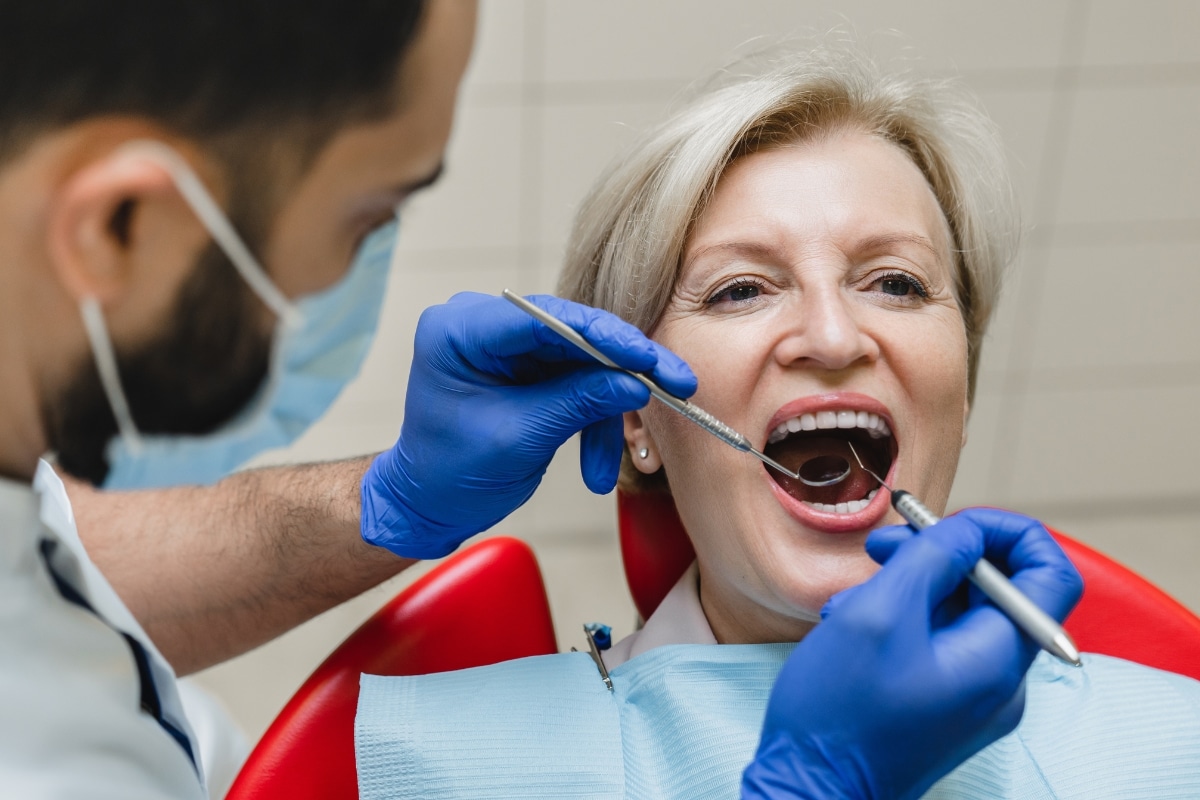
At Kyle Parkway Dentistry, oral cancer screenings are a standard part of our comprehensive dental exams. The process is quick, painless, and non-invasive.
Here’s what typically happens:
- Visual inspection — Your dentist examines your lips, gums, tongue, cheeks, the roof and floor of your mouth, and throat for any unusual changes.
- Physical examination — Your dentist gently feels the tissues in your mouth and jaw for lumps, swollen lymph nodes, or irregularities.
- Additional tools — In some cases, special lights or dyes may be used to help detect abnormal tissue that isn’t visible to the naked eye.
If anything suspicious is found, you may be referred for a biopsy or specialist consultation. Finding something early is never cause for panic — it’s cause for action.
Source: Teeth Talk Girl
How to Reduce Your Risk
While not all cases of oral cancer can be prevented, you can take meaningful steps to lower your risk:
- Quit tobacco — in all forms. This is the single most impactful step you can take.
- Limit alcohol — especially in combination with tobacco use.
- Get vaccinated for HPV — recommended for adolescents and available for adults up to age 45.
- Wear lip balm with SPF when outdoors for extended periods.
- Eat a balanced diet rich in fruits and vegetables.
- Schedule regular dental visits — at least twice a year, even if nothing feels wrong.
Your Kyle Dentist team at Kyle Parkway Dentistry is here to help guide you through preventive strategies tailored to your lifestyle.
Your Questions About Oral Cancer, Answered
How often should I get an oral cancer screening?
For most adults, once a year is a good baseline — and it’s naturally built into your routine dental exam. If you use tobacco, drink heavily, or have had a previous oral cancer diagnosis, more frequent screenings may be recommended. Talk to your dentist to determine the right schedule for you.
Can oral cancer screenings detect cancer in its very early stages?
Yes, that’s exactly the goal. Visual and physical exams can identify suspicious lesions, patches, or tissue changes before they become more serious. Early-stage oral abnormalities are often completely treatable when addressed promptly.
Is an oral cancer screening painful?
Not at all. The screening is a routine part of your dental exam. Your dentist simply inspects your mouth visually and with gentle palpation of the tissue. It takes only a few minutes and causes no discomfort.
What happens if my dentist finds something suspicious?
Finding something unusual doesn’t automatically mean cancer. Many lesions turn out to be benign. Your dentist will discuss the finding with you and may recommend monitoring it, ordering additional imaging, or referring you to an oral surgeon or specialist for a biopsy. The important thing is that it’s being watched.
Can people who don’t smoke or drink still get oral cancer?
Absolutely. While tobacco and alcohol are major risk factors, oral cancer can develop in people with no known risk factors at all. HPV-related oral cancers, for instance, are increasing in nonsmokers and younger adults. That’s why regular screenings are important for everyone, regardless of lifestyle.
Take the First Step Toward Better Oral Health
Oral cancer is serious — but it is also one of the most preventable and treatable cancers when caught early. The key is not waiting until something feels wrong.
Kyle Parkway Dentistry is proud to serve the Kyle community with compassionate, comprehensive dental care that goes beyond your teeth. Our team takes oral cancer screenings seriously because we take your health seriously.
Schedule your appointment today and let our team give you the peace of mind that comes with a thorough oral health evaluation.