Anti-Aging Dentistry: How Cosmetic Procedures Can Take Years Off Your Face

When people think about facial aging, they usually picture wrinkles or sagging skin. But your smile plays a much bigger role than most realize. Teeth, jaw support, and even how your bite comes together all help shape the lower half of your face. As those structures change over time, they can quietly add years to your appearance.
Worn teeth can shorten your smile. Missing teeth can cause cheeks to sink. Bite problems can strain facial muscles, changing how your face rests. These shifts often happen gradually, so many people don’t notice them until the mirror tells a different story.
This is where modern dental care comes in. At Kyle Parkway Dentistry, patients often learn that improving oral health can also restore balance to their facial features. Working with a cosmetic dentist is not just about brighter teeth. It is about understanding how dental structure supports a youthful, natural appearance and exploring options that protect both form and function.
How Aging Changes the Face and Smile
Aging affects the face in ways that go far beyond skin texture. Many of the most noticeable changes start inside the mouth.
Over time, teeth naturally wear down. Enamel thins, edges flatten, and the smile slowly loses length. Teeth can also shift as years of chewing, grinding, or untreated bite issues take their toll. When teeth are lost and not replaced, the jawbone beneath them begins to shrink. This bone loss reduces support for the cheeks and lips, changing the overall facial profile.
Another subtle change is the shortening of the lower face. As teeth wear and bone support decreases, the distance between the nose and chin can shrink. This alters facial proportions and contributes to an aged appearance.
These internal changes lead to visible signs that many people associate with getting older. Cheeks can appear sunken instead of full. Smile lines deepen as lips lose support. The lips themselves may collapse inward, making the mouth look smaller or tense. An uneven bite can also cause one side of the face to work harder, leading to asymmetry or a tired look.
In a growing community like Kyle, where people value an active lifestyle and a confident appearance, these changes can feel frustrating. The good news is that many of them are not permanent. Addressing dental wear, spacing, and support can make a noticeable difference in how the face looks and feels.
What Is Anti-Aging Dentistry?
Anti-aging dentistry focuses on restoring facial balance by improving the health, position, and structure of the teeth and jaw. The goal is not to change how someone looks, but to help them look refreshed and well-supported.
Traditional cosmetic dentistry often focuses solely on appearance, such as whitening or reshaping teeth. Anti-aging dentistry takes a broader view. It looks at how tooth wear, bite alignment, and bone support affect facial proportions over time. Treatment planning considers how the smile fits within the entire face.
Rather than chasing trends, this approach aims to preserve natural structure. Supporting the jaw helps maintain cheek fullness. Proper tooth length restores smile harmony. Balanced bites reduce muscle strain that can affect facial posture.
For patients visiting a cosmetic dentist in Kyle, this means care that blends aesthetics with function. The outcome is a subtle improvement that feels natural, not overdone. The smile works better, looks healthier, and supports the face in a way that reflects how you want to age.
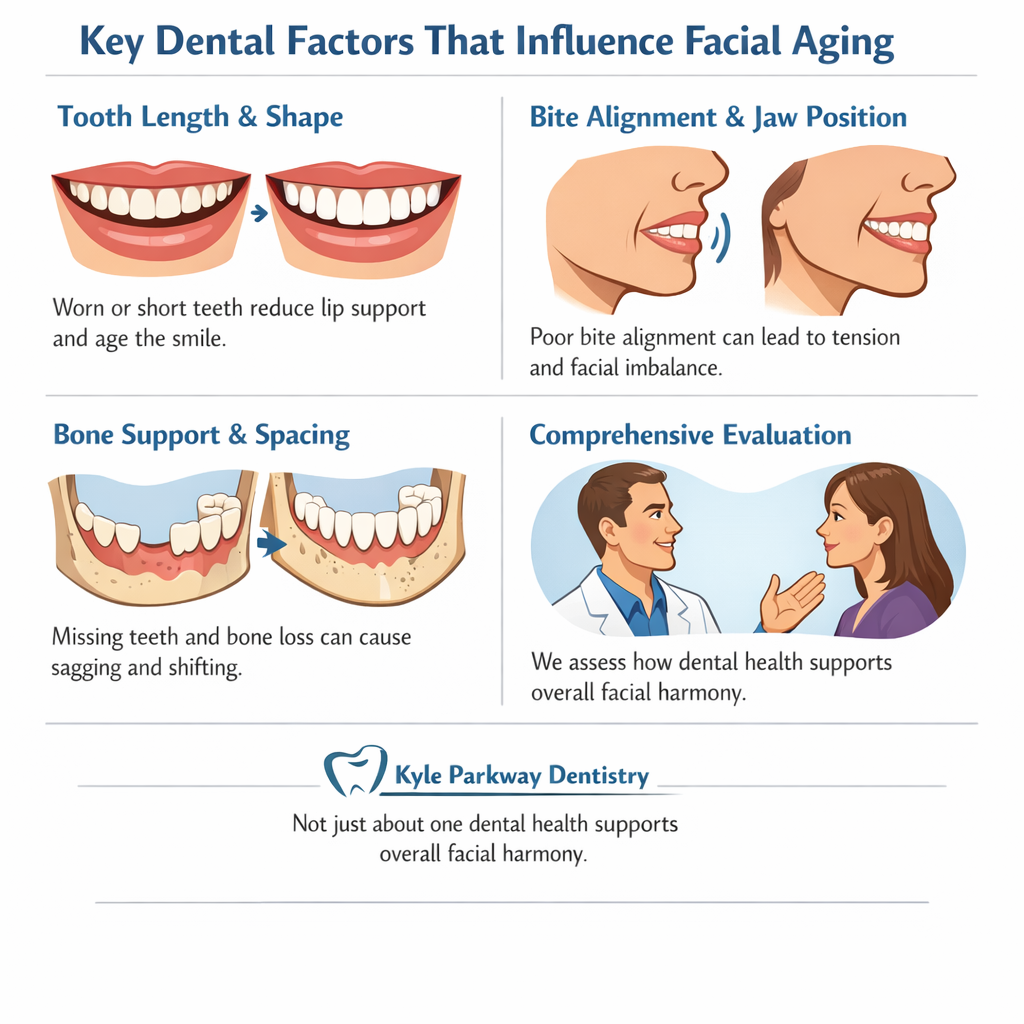
Key Dental Factors That Influence Facial Aging
Tooth length and shape
Short or worn teeth are one of the most common contributors to an aged appearance. As teeth lose height, the smile appears collapsed. This can reduce lip support and make the mouth look tense or smaller. Restoring proper length often brings back balance to the lower face.
Bite alignment and jaw position
An uneven bite forces facial muscles to compensate. Over time, this strain can change how the jaw rests and how the face looks at rest. People may notice jaw tension, asymmetry, or discomfort. Correcting bite alignment helps muscles relax and allows the face to settle into a more natural position.
Bone support and spacing
Missing teeth have a major impact on facial aging. Without stimulation from chewing, the jawbone shrinks. This loss of bone support causes cheeks to sink and lips to lose structure. Gaps also allow remaining teeth to shift, worsening the imbalance.
At Kyle Parkway Dentistry, evaluations focus on how these factors work together. Seeing a cosmetic dentist is not just about improving one tooth. It is about understanding how dental health supports long-term facial harmony.
Cosmetic Dental Procedures That Can Rejuvenate Your Appearance
Veneers and bonding
Veneers and bonding are often used to restore tooth length, shape, and symmetry. They can smooth worn edges, close small gaps, and brighten the smile. By rebuilding proper proportions, these treatments improve lip support and soften smile lines without looking artificial.
Dental crowns
Crowns help rebuild teeth that are severely worn or damaged. Restoring height and strength to these teeth can improve bite balance and facial proportions. When teeth function properly, facial muscles work more evenly, contributing to a more relaxed appearance.
Teeth whitening
A brighter smile creates an immediate sense of youthfulness. Whitening does not change structure, but it enhances overall facial appearance by making the smile look healthier and more vibrant. Many patients choose this as a first step before more comprehensive care.
Dental implants
Implants play a key role in preserving facial structure. They replace missing teeth and help maintain jawbone health. By preventing bone loss, implants support cheeks and lips, reducing the hollowed look that often follows tooth loss. For long-term facial balance, this option is especially important.
Choosing the right combination depends on individual needs. A cosmetic dentist in Kyle evaluates how each procedure contributes to both appearance and function, creating results that age well over time.
How Dental Restorations Affect Facial Balance
Dental restorations do more than fix teeth. They help restore facial balance from the inside out. Properly supported teeth provide structure for the lips, helping them appear fuller without added volume. Cheek support improves when the jawbone and bite are stabilized.
With balanced restorations, the jawline often appears more defined. Muscles no longer overcompensate, allowing the face to relax into a natural position. This can reduce the appearance of sagging and asymmetry.
Patients often notice they look more rested, even if they cannot pinpoint why. That is the power of structural support. When the smile is rebuilt thoughtfully, the face reflects health rather than age.
Functional Benefits That Also Slow Facial Aging
Improved function plays a quiet but important role in facial aging. When the bite is balanced, facial muscles do not have to work overtime. This reduces tension in the jaw, neck, and lower face.
Balanced chewing distributes pressure evenly, protecting both teeth and the jawbone. This helps slow further wear and bone loss. Proper alignment also prevents teeth from grinding against each other, preserving their length.
These functional improvements support long-term stability. A face that functions well tends to age more gracefully. Addressing these issues early can protect both comfort and appearance.
Who Is a Good Candidate for Anti-Aging Dentistry?
Anti-aging dentistry is not limited to one age group. Adults with worn or chipped teeth often benefit from restoring proper structure. Patients with missing teeth can protect facial support by addressing gaps early.
People who notice changes in facial shape, such as sunken cheeks or deepened smile lines, may also be candidates. Those seeking natural-looking improvement rather than dramatic change often find this approach appealing.
At Kyle Parkway Dentistry, consultations focus on listening first. Each plan is based on facial balance, oral health, and personal goals, not trends.
Facial aging is not just about skin. The health and structure of your smile play a major role in how your face changes over time. By restoring balance, support, and function, dental care can help you look refreshed while still looking like yourself.
The most effective results are subtle. They support the face rather than alter it. Whether you are addressing wear, spacing, or bite concerns, thoughtful care can make a lasting difference.
If you are considering ways to protect your smile and facial harmony, exploring your options with Kyle Parkway Dentistry is a smart place to start. A healthier smile often leads to a more confident, youthful appearance that feels natural and comfortable every day.
Frequently Asked Questions
At what age should someone consider anti-aging dental care?
There is no specific age. Anyone noticing tooth wear, bite changes, or facial imbalance can benefit from an evaluation.
Will these treatments change how my face looks naturally?
No. The focus is on restoring support and balance, not altering your natural features or expressions.
How long do results from anti-aging dental treatments last?
Results can last many years, especially when restorations are maintained with routine dental care and healthy habits.
Can improving my bite really affect my facial appearance?
Yes. A balanced bite helps facial muscles relax, which can improve symmetry and reduce tension-related aging signs.
Is anti-aging dentistry focused only on appearance?
No. It also improves comfort, chewing function, and long-term oral health, which supports lasting facial balance.